What Vacuum Truck Services Cover in the GTA
A vacuum truck is a sealed tank on a heavy chassis with a blower that pulls air out of the tank. The pressure difference drags liquid, sludge or dry material up the hose and into the tank. Our trucks run up to 27 inch Hg of suction, which is enough to lift saturated clay and heavy grit, not just water.
The same three trucks that run our hydrovac excavation work also handle removal jobs: industrial tanks, sumps, interceptors, lift stations and construction sites. On storm and sanitary systems, the work moves over to our sewer and culvert cleaning crews, which add a jetter to the mix.
Wet vacuum vs dry vacuum
- Wet vacuum handles water, slurry, sludge and liquid industrial waste. A decant system can return clear water on site where permitted, cutting disposal volume.
- Dry vacuum handles gravel, sand, roof ballast, debris and spilled material. Cyclonic filtration protects the blower and keeps dust down around people.
Sizing the Truck: The Part Most Quotes Skip
The biggest cost driver on vacuum work is not the hourly rate. It is how many times the truck has to leave the site.
| Job | Typical volume | Truck we send | Why |
|---|
| Single sump or interceptor | Under 1,500 gal | 2,500 gal | One trip, lowest rate |
| Wash bay with trench drains | 2,000-5,000 gal | 6,000 gal | Saves 1-2 dump trips |
| Industrial tank cleanout | Varies | Either, plus dewatering | Cuts disposal cost |
| Roof ballast or gravel spill | By weight | Dry vac setup | Axle limits first |
| Hydro vault pump-out | 500-2,000 gal | 2,500 gal | Tight urban access |
A round trip to a licensed facility can take 60 to 90 minutes in GTA traffic. At $280-$450 CAD per hour, a second trip easily costs more than the difference between our two truck sizes. We do this math before the quote, everytime.
Field note from our crew
Nine times out of ten, this is where the previous contractor cut a corner: they sent the small truck because it was available, then billed the extra trips. We would rather tell you up front which truck fits.
Liquid Industrial Waste and Your Paperwork
Liquid industrial waste in Ontario has to go to a receiving facility approved by the Ministry of the Environment, Conservation and Parks (MECP), and every load needs a manifest. Before we arrive, we confirm:
- What the material is and whether a waste profile exists.
- The approved receiving facility for that waste class.
- Who signs as the generator on your side.
The driver hands over your copy at the gate. If your facility is audited, the trail is complete.
Confined Space Entry
Some cleanouts need a person inside the tank, pit or vault. Our crews are confined space trained and bring continuous gas monitoring, ventilation and a rescue plan. Alex Novak spent seven years running a vacuum truck on confined space cleanouts and hazmat response before he founded the company, and that discipline is built into how we run entries today.
What Affects Vacuum Truck Cost in Toronto?
- Volume and material: liquid, sludge or dry, and how much of it.
- Truck size: $280-$350/hr standard, $350-$450/hr for the 6,000 gallon unit.
- Disposal: billed by load at the receiving facility’s rate, on its own line.
- Access: long hose runs, rooftop work or confined space entry add setup time.
- Timing: business-hours scheduling by default; sewer, water main and insurance emergencies get 24/7 dispatch at off-hours rates.
Commercial facilities across the GTA can book a free on-site assessment. Our lead technician brings a tank capacity worksheet and disposal options so the quote matches the job.
Industrial Tank Cleaning With a Vacuum Truck: Step-by-Step Process
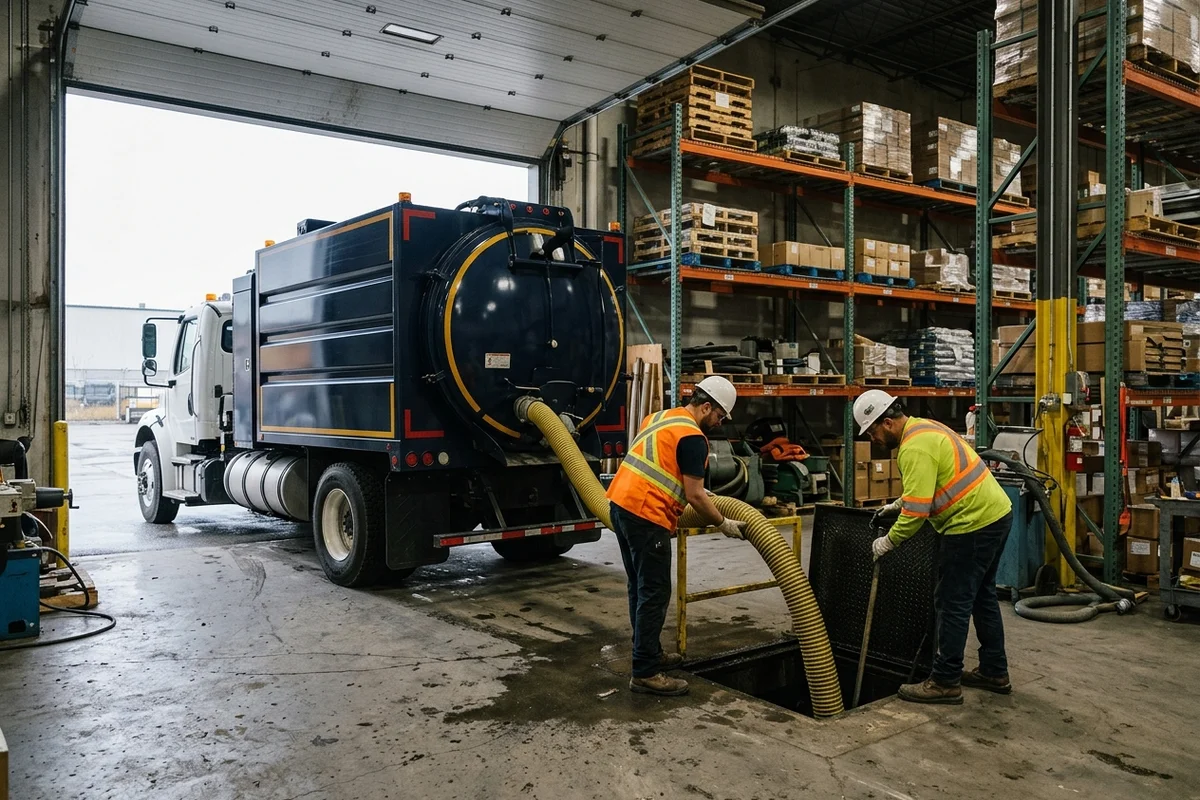
An industrial tank cleanout starts with gas detection and confined space entry paperwork before any crew member steps near the manway. We draw a four-gas reading from inside the tank, document the result, and run positive ventilation for the full cleanout. The 6,000-gallon Vactor 2100i stages at a 50-foot setback with the vacuum hose fed through the manway and the suction wand on a monopod so no one has to enter during initial recovery.
Phase one lifts the free liquid off the tank floor at 27 inch Hg suction. Phase two breaks up settled sludge with 3,500 PSI hot water circulated through the sludge dewatering circuit and vacuumed back out. Phase three is a wash-and-recover cycle until the swab test comes back clean. A food-grade brine tank runs 6-8 hours end to end. A petroleum sludge pit can run 12-16 hours over two shifts. Every load leaves with a waste manifest, the final inspection photo goes to your maintenance supervisor, and the tank is handed back ready for its next product.
How Often Should Industrial Sumps, Pits and Tanks Be Vacuumed?
Catch basin sumps on a commercial parking lot need vacuuming once per year to meet Toronto Water maintenance expectations, twice per year if runoff carries sand or de-icing residue. Oil-grit separators at fleet yards need quarterly service to stay compliant with MECP discharge limits. Industrial lift stations in GTA food plants and manufacturing facilities get monthly inspection and vacuuming on a maintenance contract so sludge never reaches the pump impellers.
Sumps and pits inside buildings follow condition rather than calendar. We recommend vacuuming when the sludge depth hits 25% of total pit depth, when solids affect pump cycle time, or when the facility annual inspection flags accumulated material. A Mississauga food manufacturer we work with runs a 12-month contract for brine recovery pits, two cleanouts per year on tank 4 (heavy sludge) and one per year on tank 2 (light residue). In our opinion, the right frequency is whatever stops product loss and compliance surprises.
Hydro Vac vs Vacuum Truck: Which One You Need
A hydrovac truck and a vacuum truck share the same debris tank and 27 inch Hg vacuum but use different front-end tools. A hydrovac adds a 3,000-4,000 PSI pressurized water wand for cutting soil loose during excavation. A vacuum truck without the water package does recovery only: pump wet or dry material through the hose into the tank with no cutting capacity.
Rule of thumb: if the job needs to break up material (soil, sludge, settled solids), you need hydrovac. If the material is already loose (standing water, free-flow slurry, catch basin fines) you need vacuum truck only. Our Vactor 2100i trucks run both configurations so we switch front ends depending on the shift. Nine times out of ten, a Toronto industrial cleanout needs both: hydrovac to break up the sludge and vacuum to recover it.