How an Operated Hydrovac Rental Works
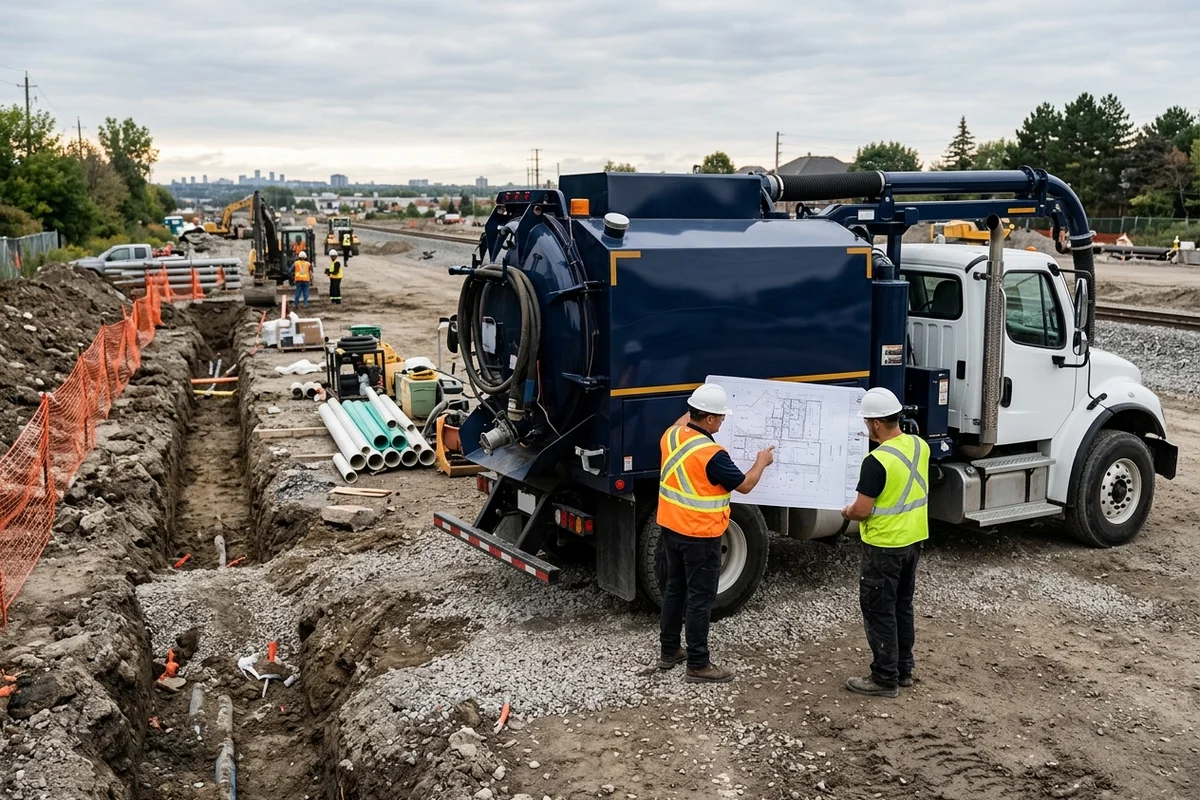
A hydrovac rental from us is a block of truck time with one of our operators attached. Your site lead directs the work: where to dig, how deep, in what order. Our operator runs the truck, the wand pressure, the vacuum and the boom, and keeps the logs.
That split works well on jobs where your crew has a lot going on between exposures, like utility relocations, pipe installs and corridor work. The truck is there when you need the next crossing exposed, and on standby when you don’t. For defined scopes like a set of potholes or a fiber run, a quoted hydrovac excavation or slot trenching job may cost less than a rental term. We’ll tell you which is cheaper.
What’s included in every rental
- Hydrovac truck (2,500 or 6,000 gallon tank)
- Red Seal certified operator
- Fuel, insurance and maintenance
- Daily time sheet and exposure log
- Locate verification each morning
What’s billed separately
- Mobilization: one fixed line per term.
- Disposal: by load at a licensed facility.
- Weekend days: at the $500-$700/hr weekend band.
Operated vs Bare Rental
| Factor | Bare rental (truck only) | Operated rental (ours) |
|---|
| Who runs the truck | Your employee | Our Red Seal operator |
| Strike liability | Yours | Shared with an experienced crew |
| TSSA tank responsibility | Often yours | Ours |
| Insurance | You add the truck | Included, $5M CGL + $2M property |
| Training needed | DZ licence, CSA Z247, confined space | None on your side |
| Breakdown | Your problem | We fix or swap |
We don’t offer bare rentals. In our experience they look cheaper on paper and cost more the first time something goes wrong.
Field note from our crew
Nine times out of ten, this is where the previous contractor cut a corner: a rented truck, an operator who met it that morning, and nobody checking the locate sheet. Our operators know the truck everytime because it’s the one they run all year.
Which Rental Term Fits Your Job?
- Half-day ($1,120-$1,800): a few potholes, a single crossing, a quick verification.
- Full day ($2,240-$3,600): a potholing package, design test pits, a short trench.
- Week ($12,000-$22,000): utility relocations, corridor work, multi-phase installs.
- Project (multi-week): larger builds with the same truck and operator, priced after a site walk.
Commercial projects across the GTA get a free on-site assessment. Our lead technician brings a tank capacity worksheet, the locate map and disposal options, so the rental term you book matches the work.
Hydrovac Operator Training in Ontario: Certifications Your Operator Should Hold
A certified hydrovac operator in Ontario carries five documents, and any contractor renting you a truck should hand you copies on request. First: a DZ licence from the Ministry of Transportation (the truck is Class D with air brakes, DZ allows operation and tow of a hydrovac tanker). Second: CSA Z247 ground disturbance training with current renewal (every three years). Third: a confined space entry ticket from an approved provider (every two years). Fourth: TSSA pressure vessel awareness training for the 27 inch Hg vacuum tank. Fifth: Red Seal certification in a related trade (truck mechanic, heavy equipment operator or civil equipment technician).
Our operators carry all five and we show the paperwork at the pre-start meeting on every job. Nine times out of ten, this is where a cheaper quote comes from: the rental contractor sends an operator with the DZ licence only, no CSA Z247, no confined space ticket. When the first-visit utility inspector asks for the operator’s certifications, that job stops until someone drives out from the shop with the right paperwork. The published day rate stays the same whether the operator is certified or not. The difference shows up when the inspector arrives.